General information
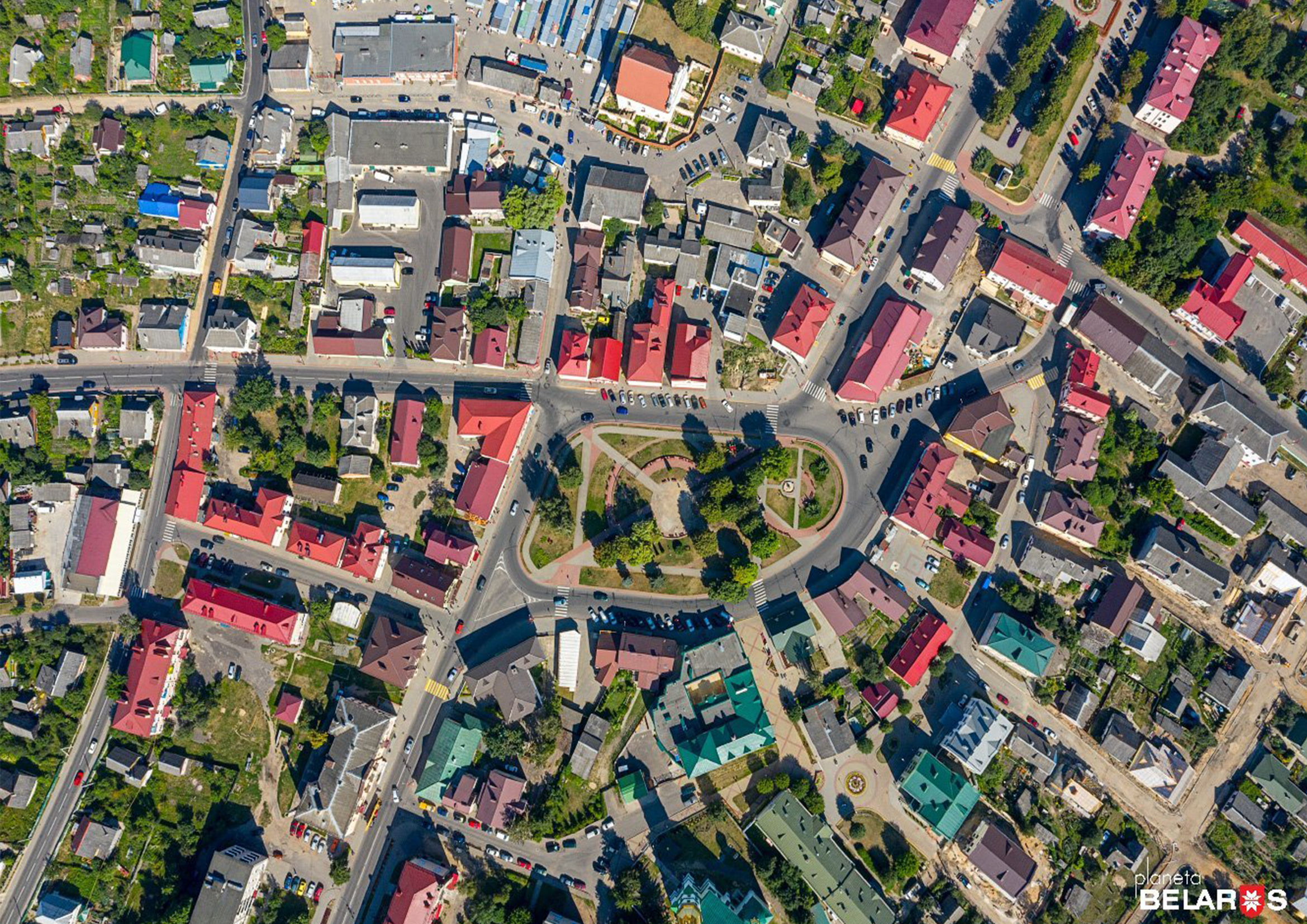
Slonim is a town in the Hrodna Region, Belarus, an administrative centre of the Slonim District. It stands on the Ščara river, at the Isa river influx.
According to archaeological research, the town was founded in the 11th century at the place of a small settlement. Its first mention as “Uslonim” in the Hypatian Chronicle dates back to 1252. Probably, the name came from the word “zaslona (cover)”.
From the middle of the 13th century, Slonim was a part of the Grand Duchy of Lithuania. From the late 13th century, the mentions of the fortified Slonim castle with a town rising around it began to appear. Trading routes bonded Slonim with Western Europe, the Ščara river was navigable. The Slonim troop participated in the Battle of Grunwald of 1410. In 1513, Great Duke of Lithuania Žyhimont The Old delegated Slonim with a self-administration right due to the Magdeburg right. In 1591, the town got its modern coat-of-arms (a golden lion with a doubled silver cross on a blue field). In the 16th century, Slonim belonged to the Valovič and Sapieha noble families, including a famous Grand Lithuaninan Chancellor Lieŭ Sapieha. In the 17th century, it was transferred to the Ahinskis dukes. As a result of the war of 1654–1667 between the Polish-Lithuaninan Commonwealth and the Muscovite state, Slonim was significantly damaged.
Economic and cultural prosperity of Slonim is connected with the activity of Mihail Kleafas Ahinski, town head and Great Lithuaninan Hetman. Here, in the late 18th century, he founded his residence, created a printing house, a theater, a chapel, built manufactures and a canal (the Ahinski’s canal).
In 1795, Slonim became a part of the Russian Empire. In 1801, it became the centre of the Slonim poviet of the Hrodna province.
In 1825, more than 5 thousand people lived in Slonim. There were 700 houses and 2 cloth factories. In 1857, the population already exceeded 9 thousand people.
In 1886, the Baranavičy–Bielastok railway was laid through Slonim. After that, the population increased to 16 thousand people. There was a two-grades poviet school, parish and primary Jewish schools and a private girls’ boarding school, 2 Orthodox churches, 2 Catholic churches, 7 synagogues and a mosque. In the early 20th century, gymnasiums and the Slonim realschule were opened.
In 1918, Slonim became a part of the Belarusian People’s Republic. After the Riga’s Agreement of 1921, it became a part of Poland and the poviet centre in the Navahrudak voivodeship. In the beginning of World War II, it became a part of the BSSR. Since June 26, 1941, it was ruled by the Nazis. This occupation brought significant human and material damage. Slonim was liberated on July 10, 1944.
Today, around 50 thousand people live here. It is one of the touristic centres of Hrodnienščyna. It is included in such tours as “Stone Chronicles of Paniomannie”, “To the Tadevuš Kasciuška’s Homeland”, “Sapieha’s Archipelago”, “Manors, Palaces, Castles”, “Slonim Architectural Monuments”.
Publication date: 16.05.2022.
For convenient navigation through the landmarks, use the FREE mobile program