Archbishop’s Palace
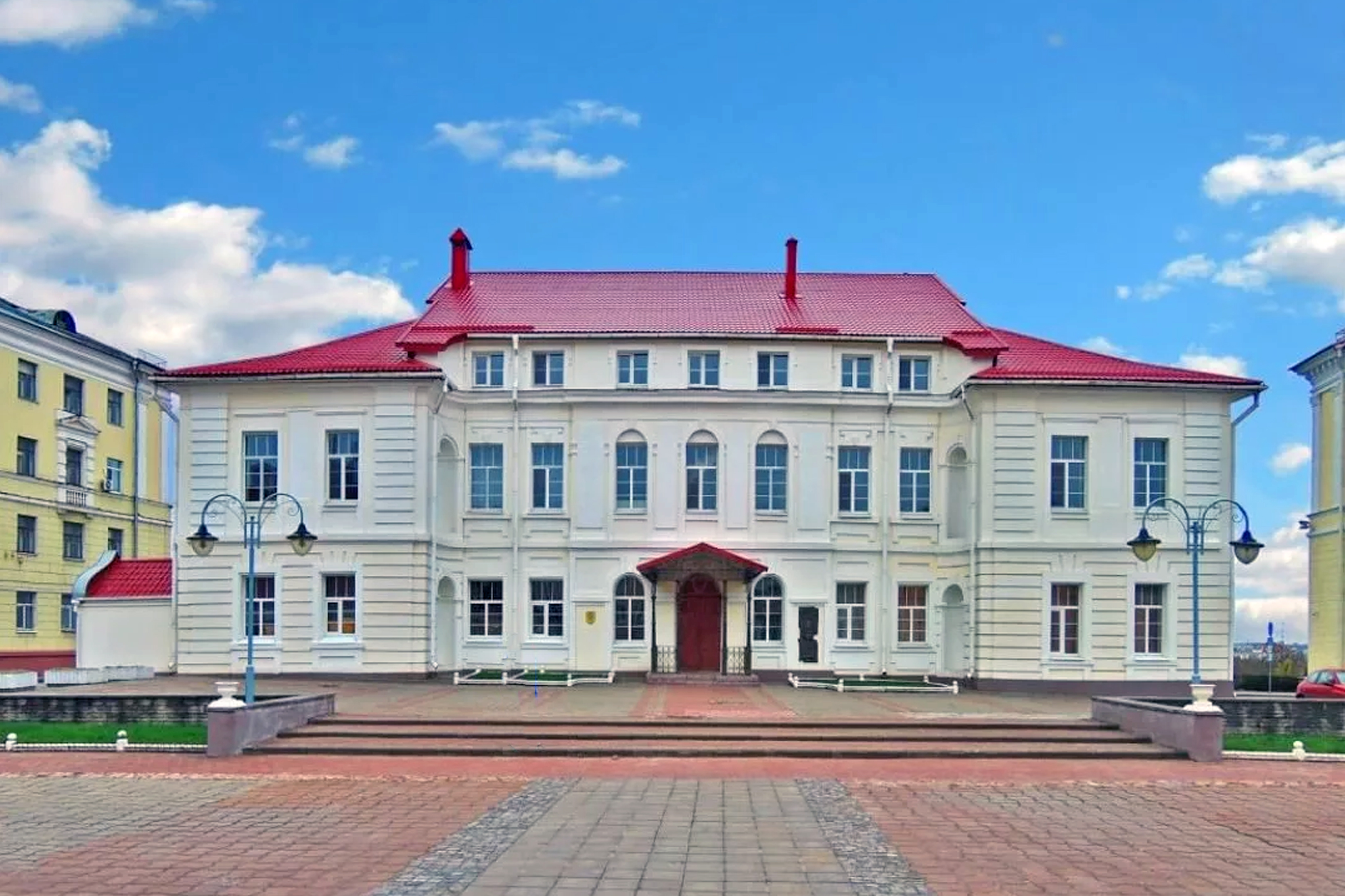
The Archbishop’s Palace is a monument of late Baroque architecture with early Classicism elements. It was erected in the second half of the 18th century for Archbishop Georgy Konissky according to the design of the famous Vilnius architect Johan Hlaŭbic.
The Archbishop's Palace was a part of the Spaski Monastery ensemble, which together with the seminary building formed a single architectural complex. The palace was built deep in the quarter on the high bank of the Dnieper. There were first a large number of rooms, of which the main place was given to a spacious hall for receptions. On the second floor, there was Georgy Konissky's own room, as well as a library. The third floor consisted mainly of small rooms for servants and visitors of the Orthodox bishop.
Today, the palace is a three-storey brick building, rectangular in plan, with symmetrical two-storey avant-corpses on the sides, covered with a high broken roof. The main and courtyard facades have curvilinear transitions to the avant-corpses.
There is a memorial plaque on the building, which reads, “In 1785–1795, Archbishop Georgy Konissky, a well-known figure of the East Slavic culture, educator, writer and politician, lived and worked in this house”. Today, the building of the former palace houses the Mahilioŭ History Museum.
Publication date: 15.07.2021.
For convenient navigation through the landmarks, use the FREE mobile program