Houses of Polish officials
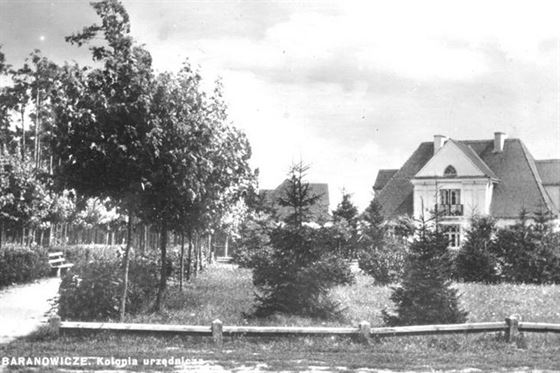
In the center of the city there are two buildings that attract attention. One of them is a house of an unusual architecture with a red brick mezzanine, next to the House of Culture. The second is a two-storey building built in the modernist style without architectural excesses. These buildings make it possible to imagine what one of the districts of the central part of Baranavičy looked like in the 20–30s of the XX century.
The signing of the Riga Peace Treaty on March 18, 1921 was the result of the Soviet-Polish war. According to it, the western lands of Belarus, including Baranavičy, became part of the Second Polish-Lithuanian Commonwealth. During the First World War and the Soviet-Polish war, the city was badly damaged, so the task of the members of the city government was to restore it.
Polish officials, who were in desperate need of housing were sent to the western regions of Belarus to organize the management system on the annexed lands. In order to solve this problem, the Polish government developed measures to build a so-called colony (settlement) for officials. On May 28, 1924, the Ministry of Finance granted a loan for the construction of houses for officials in the eastern provinces. The General Building Plan was developed. The author of the general plan for the official colony in Baranavičy was the engineer-architect Adam Paprocki, the construction works were supervised by the engineers-architects Vitoĺd and Zyhmunt Vyhanoŭskis'. In accordance with the general plan, the houses were erected in the style of the “gentry estate”. Streets passed through the territory of the colony dividing it into quarters. Public buildings which housed the city court and the post office were also erected on the territory of the colony. These buildings, like almost the entire official colony (except two houses) have not survived.
Publication date: 18.02.2021.
For convenient navigation through the landmarks, use the FREE mobile program