Kudzinovičs' palace
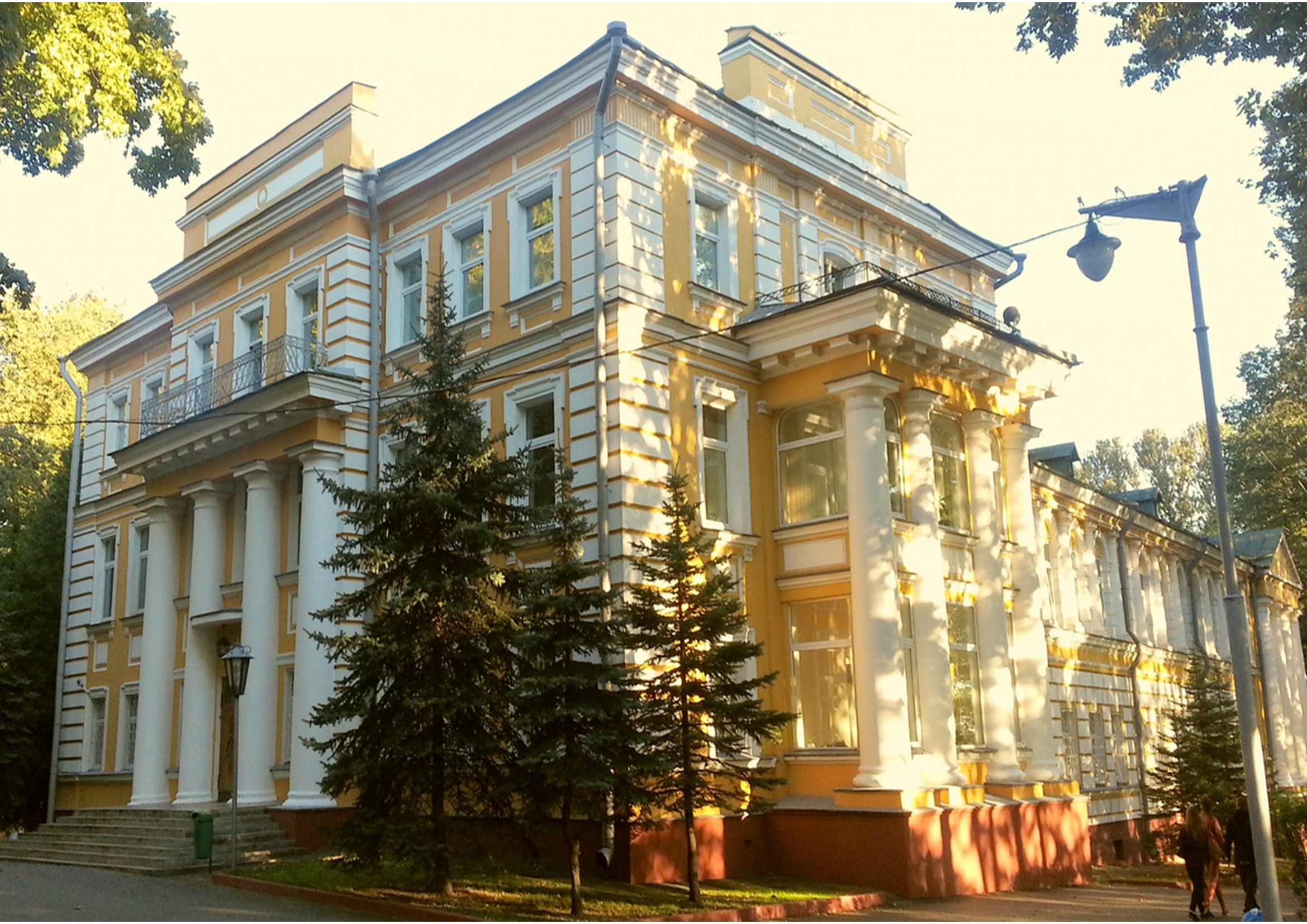
The Kudzinovičs' palace is a monument of classicist architecture of the late 18th – early 19th century. It is located on the left bank of the Dzvina River, on historic vulica Dvarcovaja. It is a historical and cultural value of Belarus.
In 1772, representatives of the Kudzinovičs' gentry family built a stone palace in Viciebsk. After the annexation of the north-eastern lands of Belarus to the Russian Empire, the palace housed nobility assembly. In 1806, the palace became the residence of the Viciebsk governor. In 1811, a southern building was added to the palace.
In the war of 1812, Napoleon stayed at the palace. By order of the French emperor, wooden buildings in front of the palace were demolished and a square, which has survived to the present day, was built. After the end of the military campaign of 1812, the Russian authorities erected a monument to the heroes of the war of 1812 on the parade ground in front of the palace. During the uprising of 1830–1831, the palace was visited by the brother of the Russian Emperor Nicholas I, Grand Duke Kanstancin, who fell ill with cholera in Viciebsk and soon died. During the Soviet era, the palace building was used for the needs of various administrative institutions.
Today, the former palace houses the regional department of the State Security Committee.
The Kudzinovičs' palace is a 3-storey rectangular building built in the classical style.
Publication date: 05.02.2021.
For convenient navigation through the landmarks, use the FREE mobile program