Hrodna Medical Academy
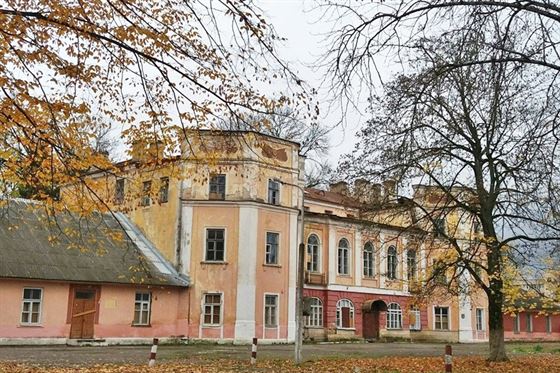
Hrodna Medical Academy is the first higher educational institution in Belarus for training of medical personnel. It existed from 1755 to 1781.
The Hrodna Medical Academy was opened on the initiative of Antoni Tyzienhaŭz in a specially erected three-story building, which was designed in the late baroque style by the Italian architect Giuseppe de Sacco. The organizer and leader of the academy was a French physician and scientist Jean Emmanuelle Gilibert.
The Academy consisted of 3 departments: the department of training of "modern doctors for cities" (10 people), training of provincial doctors and surgeons (20 people), the department of midwives (17 people). The training was carried out at the expense of the state treasury. There were 5 teachers, 2 paramedics and a midwife. The academy had a hospital with 60 beds, an anatomical theater and a museum, a natural history cabinet, a pharmacy, a library and the first botanical garden in Belarus. Over the seven years of its operation, the medical academy trained several dozen physicians who were sent to work in the state estates of the Grand Duchy of Lithuania.
After Antoni Tyzienhaŭz was dismissed from the position of Hrodna headman in 1780, Gilibert moved with his students to Viĺnia, and the building of the academy passed into the possession of the dukes Sviatapolk-Čacviarcinskis. Further the building belonged to the Russian Military Department. After the Second World War, the building housed the first and second sections of the Hrodna Court. At the time of independence, a military commandant's office was located in the building of the former Hrodna Medical Academy.
Publication date: 20.08.2020.
For convenient navigation through the landmarks, use the FREE mobile program