Trajeckaje suburb
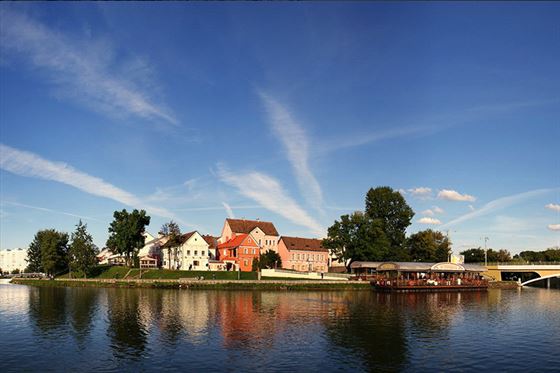
The restored Trajeckaje suburb is an open-air museum that brings citizens and visitors to the atmosphere of the 19th century.
Trajeckaje suburb was once the largest in Minsk. The settlement of this area began in the 12th century. In the 16th century on a hill on the riverside of the Svislač appeared Trajeckaje suburb and Monastery. From this came the name of the suburbs.
Trajeckaje suburb entered the borders of Minsk only in the 19th century. During the devastating fire of 1809, the suburb almost completely burned down. As a result, a new layout was developed, which is partially preserved to this day. 10 streets formed about 20 blocks, shaped like trapezoids and rectangles, in the center there was a large square. The houses were mostly wooden, the roads were partially paved. Here lived peasants, and traders, and workers, and petty officials, and even the gentry. The famous Belarusian poets Yanka Kupala and Maksim Bahdanovič lived for some time in the Trajeckaje suburb.
In Soviet times, most of buildings of the Trajeckaje suburb were destroyed. And only in 1982, partial restoration work began in the western part of the suburb.
A special place of the Trajeckaje suburb is the “rectangular” quarter of 1817 built up between the Bahdanoviča, Zaborskaha, Staravilienskaja streets and Kamunaĺnaja embankment. In this quarter, all buildings without exception are monuments of architecture.
Publication date: 17.02.2020.
For convenient navigation through the landmarks, use the FREE mobile program