Catholic cemetery
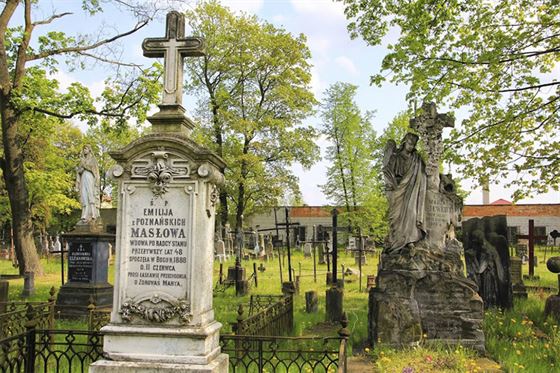
Located in the heart of Brest, the cemetery has an official name Catholic.
The oldest known burial in the Catholic cemetery dates back to 1835.
In the 1920's (after the entry of the Brest lands to Poland) the Catholic cemetery in Brest greatly expanded. Belarusians Catholics and Poles who had moved to Brest obtained here the last refuge.
During the Nazi occupation, the Hitlerities significantly reduced the area of the cemetery, but allowed citizens to rebury the remains of relatives. Only a small area of the Catholic cemetery remained untouched.
Since 1956, conducting burials has been forbidden here. At this point, there are about 3 thousand graves in the cemetery. Some of them are anonymous. The inscriptions were erased. In addition, vandals destroyed a substantial part of the tombstones.
The tomb of the Polish pilot Raman Lampe stands out among others. Originality of gravestone ornament – an airplane propeller – in the 1930’s was attracting here interested people. Over time, aircraft propeller blades disappeared from the grave, but the funeral is still unique.
Also the graves of the Polish tankers-panzers of late 1930s are of interest. They are located on the central avenue of the cemetery. In the center of gravestone crosses there is the leading star of the chassis of a platform sole and along the sides there are parts of an inner gear. Grave fences are made of tank tracks.
Publication date: 11.07.2019.
For convenient navigation through the landmarks, use the FREE mobile program