Holy Cross Exaltation Church
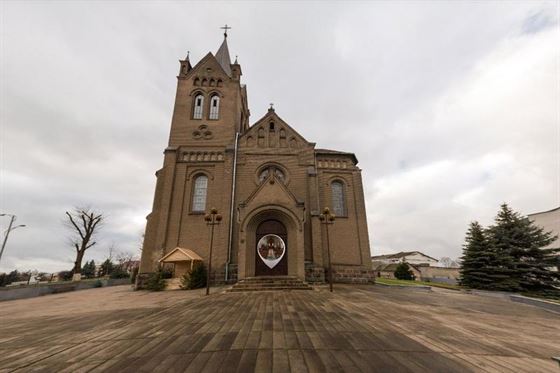
The church was built in 1913 in the neo-Gothic style.
The fate of the Holy Cross Exaltation Church resembles the fate of most of the Catholic shrines in Belarus in the late 18th–19th century. It all started with a small wooden chapel, which appeared in Viliejka in the 18th century, but burned down during a fire in 1810. A new wooden chapel was built in 1862. The construction of the church in the style of classicism began in the same year. After the suppression of the 1863–1864 uprising, the unfinished church was handed over to the Orthodox clergy. In 1874, it was rebuilt in the pseudo-Russian style and consecrated as Saint George's Church. The Catholics of Viliejka had only a small chapel left. In 1906, after the royal decree on religious tolerance, the construction of a majestic church in honor of the Exaltation of the Holy Cross began. Designed by the engineer August Klein, the yellow-brick temple bears the features of neo-Romanesque and neo-Gothic styles. After World War II, the church was closed and turned into a warehouse. Later, the shrine was declared an architectural monument, restored and housed the Silivanovič's House of Arts in it. The reconstruction hardly changed the original appearance of the church. The restoration of the temple took place in 1988–1989. In 1990, the Holy Cross Exaltation Church was returned to the Roman Catholic community of the city.
Publication date: 29.09.2017.
For convenient navigation through the landmarks, use the FREE mobile program